

When Google determines which websites are the most relevant to a particular query, two criteria examined is the publish date and date on the page. Particularly for time-sensitive queries, such as news articles, the date of publication will have a huge impact. Take, for example, the query, “Google’s algorithm update.” Considering that Google regularly updates […]

The post Your Web Page Dates: Why They Matter for SEO Freshness and How to Manage Them appeared first on BrightEdge SEO Blog.

The Power of using PR: Measuring Your PR Campaign

maspillera
maspillera
M Posted 7 years 7 months ago
t 9 min read

Why is using PR valuable?

Determining the value of using PR campaigns can be a struggle for brands, leading many to wonder whether or not their PR efforts have a positive ROI. Digital PR is easier to measure than traditional. It's recorded that 49 percent of senior communications leaders now have data that gives them a strong sense of whether there was any real-world behavior driven from the content, reports PRWeek and Cision in the Global Comms Report. The same report also says that, 43 percent of senior communications leaders have data that gives them a strong sense of what people do after they consume the content.

For brands interested in capturing some of this valuable data, here is what they should know about measuring PR campaign success.

How do you measure PR campaign success?

To measure PR success, campaign goals need to be defined. There are several different metrics to consider when measuring the impact and success of a PR valuable campaigns happen from using pr - brightedgecampaign, each one giving you information about customers at a particular stage.

Measuring PR mindshare, awareness, reputation, and sentiment

At the top of the PR success funnel are mindshare, awareness, and reputation. If you represent a high-end brand, mindshare and reputation awareness are key to customer willingness to pay a premium for your product.

Mindshare explains why famous brands can charge more for their products - people value what they know and know what they value. A famous brand removes uncertainty about quality and performance and that drives higher purchase conversion.

Social media can be a valuable channel for measuring mindshare, awareness, and reputation. Consumers use social media to share with their friends, family, and colleagues what they love, like, and don’t like about products and services.

You have key metrics to monitor on social media.

  • Content reach
  • Engagement
  • Sentiment

1. Content reach. Content reach can be gathered by examining how many people in aggregate have viewed your content as well as the number of impressions your content has.

2. Engagaement. Engagement then focuses on how people responded to the content, which provides a strong indication about how the content connected to them. Different metrics exist on the different social media platforms:

  • Facebook engagement measures: comments, shares, and likes.
  • Twitter engagement measures: replies, retweets, URL clicks, and likes.
  • Instagram engagement measures: comments, likes, Instagram Story reach, and URL clicks.
  • Youtube engagement measures: comments, shares, views, number of likes/dislikes, URL clicks.

High engagement numbers will generally correlate strongly with your content reach. As more people respond to your material and share it with their own followers, you will in turn see more people reading the material and higher rates of impressions.

3. Sentiment. Sentiment captures whether the comments are positive or negative. The saying, "I don't care what you say about my brand as long as you spell my name correctly" is a myth. Being plastered with negative comments from a swarm of nasty trolls spelling your name correctly is bad.

Measuring your SEO impact and social amplification from using PR

In the middle of the PR success funnel are traffic, SEO impact, and social amplification. Generally, PR campaigns are comprised of articles published on third party platforms that provide valuable announcements and information about your business. These campaigns then tie closely with material you publish on your own site.

Using PR platforms makes it easier to monitor how many people click through to your website after reading a PR piece. Not only can you see how many people click through to your site, but you can also monitor additional metrics, such as backlinks.

Backlinks provide you with valuable information, including how well the audience responded to your piece and if they see it as worthwhile to share with their own audience. Google appreciates backlinks as a ranking factor because it lets them know how other people see the page. A website with many backlinks from reputable sites can generally be assumed to be one that provides helpful information. This increases Google’s trust in the site, and therefore, its ranking, which drive traffic.

Internally, your PR campaigns should coincide with blogs and on-site articles that provide more information about your organization and what you are doing to serve customers and remain at the forefront of your industry. Press releases and articles also help define public information, which make it easier for employees to share without worrying about sharing confidential information.

Blogging is also a great way to generate traffic and trust. According to the Content Marketing Institute, more than half of 18-49 year olds get their news and using pr can be beneficial to your campaign - brightedgeinformation online, and that number continues to grow. You can also see support for this strategy by considering that small businesses with blogs get 126 percent more lead growth than those without, according to the CMI.

From an SEO perspective, as you generate traffic from any PR campaign you can start to see the positive impact on your SERP rankings. Make sure all the content has been properly optimized to attract more attention, and then increased traffic from promotions and social media will help to boost your position in the results.

Social amplification results from content sharing on social networks, like LinkedIn, Twitter, and Facebook. It’s good practice to link positive press mentions on all your social media to amplify your awareness, brand reputation, and purchase decisions. This helps customers hear about your organization from other sources, increasing your brand value and trust in their minds.

Measuring PR revenue, conversions, and pipeline contributions

At the bottom of the PR success funnel are revenue, conversions and pipeline contributions. Google Analytics can help you to track referral traffic driven by using PR. You can use this referral traffic to track from where your qualified sales originated.

UTM stands for urchin tracking module, and it is the longstanding standard for channel tracking in Google Analytics. At the end of each link, add ?utm_medium=referral&utm_source=PR&campaign=3-12-press-release. If you do not add UTM to your PR and Social, it can often be incorrectly counted as Direct traffic.

By drilling down in Google Analytics in on Acquisition/All Traffic/Channels Referred, you can see the traffic PR secured on third-party sites sourcing traffic and then track what customers did after reading those articles. You can watch them through the pipeline, seeing how many pageviews, the number of sales qualified leads, and leads that materialize. You can then determine the revenue these leads drove for the organization.

Using a first-touch attribution model, you will be able to track customers and determine what first brought them to your site. You can then analyze the referring site and start to gain a better idea of the financial benefit of your press releases and media mentions as well as what articles drive converted traffic.

A strong PR campaign can provide valuable benefits for brands looking to increase their engagement across the web and social media apps. Executives prefer all activities to be measurable and tracked. Consider your campaign goals with your next PR campaign and the KPIs you can use to capture the success of your strategy.
Determining the value of PR campaigns can be a struggle for brands, leading many to wonder whether or not their PR efforts have a positive ROI. Digital PR is easier to measure than traditional: 49 percent of senior communications leaders now have data that gives them a strong sense of whether there was any real-world […]

The post The Power of PR: Measuring Your PR Campaign appeared first on BrightEdge SEO Blog.

Kiddie Academy Achieves 249% Increase in High Ranking Keywords

Find out how Andy Seguin of Kiddie Academy scored a 41% increase in conversions from SEO

67%
increase in organic traffic
225%
increase in Local 3-pack listings

Kiddie Academy Achieves 249% Increase in High Ranking Keywords

Find out how Andy Seguin of Kiddie Academy scored a 41% increase in conversions from SEO

THE PROBLEM

Kiddie Academy, a leader in educational child care, has two distinct business objectives 1) connect the Kiddie Academy brand to their consumers locally and 2) reach new potential franchisees to help expand their network of centers across the country. Prior to BrightEdge, they used a variety of SEO tools and partners to establish a strategy to increase organic search. However, these strategies were more of a reactive approach to SEO and made it difficult to measure how effective their initiatives were in terms of performance. Kiddie Academy’s digital marketing team needed a solution that would ultimately help generate leads and inquiries from prospects seeking childcare or people looking to start a business.

THE SOLUTION

Just over two years ago, Kiddie Academy selected BrightEdge as their primary SEO platform which immediately made an impact by helping them to identify critical content gaps within their website. The BrightEdge team also provided key recommendations to produce wins for Google Quick Answer search terms which resulted in higher traffic volume to newly established targeted locations. In fact, the insights from BrightEdge helped produce higher traffic and rank even before local academies had opened.

andy seguin kiddie academyTHE RESULTS

Kiddie Academy recently conducted a study that reflected an average of 67% increase in monthly organic traffic and a 41% growth in monthly organic conversions over the last two years. Currently, organic traffic leads the way in terms of all website traffic, even beyond their paid initiatives, and over half of all lead conversions. These results have paved the way for their executive teams to encourage an SEO-led enhancement for new website initiatives and adding a new position to their digital marketing team with exclusive focus on SEO.

Working with BrightEdge Customer Support was extremely helpful... They know our business, what our challenges are, and what we are trying to solve for. They were able to introduce the latest innovations of the platform and adapt it to our business needs and solve it from a Kiddie Academy lens.

Request a demo of the BrightEdge platform today!

AMP Update: The Latest On Accelerated Mobile Pages

enewton@brightedge.com
M Posted 7 years 7 months ago
t 9 min read

Websites that aren't optimizing for site speed are setting themselves up for poor rankings, high bounce rate, and bad user experience. An estimated 40% of people will click off a site that doesn't load in 3 seconds or less. For a business as large as Amazon, a single extra second in load time can therefore translate to loses as high as $1.6 billion per year.

A few years ago, long page loading times on mobile led Google to begin work on a collaborative effort to create AMP, or Accelerated Mobile Pages. These pages are designed to load lightning fast, improving the user experience across the web. In the years since their first development, they have caused debate but also discover amp update - brightedgespread across the digital ecosystem.

The value of AMP lies in its ability to help brands create fast, effective sites. Since this development has been around for a few years now, we thought we would take a look at the evolution and path of this strategy to help our community determine if they should put it to use as well.

What is AMP?

AMP first appeared in 2016 as an open source effort put forth by Google to enhance the site speed of many mobile web pages. The median load time for pages marked with AMP is as quick as 1 second. Pages created in HTML and Javascript can both be properly formatted to work in AMP, and these pages work on most browsers and platforms.

Pages that have been marked up with AMP will be stripped of any unnecessary or slow-loading features. While this does away with some of the functionality of the site--leading to debate about the role of articles optimized with AMP within the buyer’s journey--it does help to provide the page with an optimal position within the SERP.

Google created this markup to improve the user experience by encouraging the creation of web pages that loaded particularly fast. They often place emphasis on these marked up pages, giving them priority positions in carousels at the top of SERPs.

How has AMP progressed?

AMP has been available for marketers for about 3 years now. When this AMP update was first introduced, it caused considerable discussion within marketing circles. People wondered about the role the articles would play for mobile buyers as they would not provide the same opportunities for lead capture as a standard web page. People also wondered about the level of value it would provide for various sectors.

When the AMP upate was initially launched, it focused considerably on media sites with the idea of helping web pages appear in Google’s top news carousel on mobile devices. Since then, it has expanded its focus with brands from a variety of different sectors finding the value of employing it.

Some of the initial problems people had with making webpages AMP-compliant, such as the lack of lead capture forms, have also been rectified. Brands can now place forms on AMP pages. This increases the opportunity for engagement with users and thus generates more enthusiasm from site owners.

Three years out, AMP has become firmly entrenched within the marketing world, with the benefits and drawbacks clearly visible. By the end of just the first 18 months, we saw an estimated 900,000 web domains using AMP within their strategies with 2 billion uses worldwide.

By now, AMP also has made a strong appearance across a variety of industries with entertainment and news remaining some of the largest categories of usage.  Major domains, including Reddit, Ebay, and Pinterest have implemented AMP on their websites.

How do I implement AMP successfully?

To implement AMP, you will want to design a stripped-down page that provides nearly the same feel as your standard website. Your branding and colors should be consistent so that customers do not lose association with the site they are on.

Keep in mind that there are some design limitations on AMP, particularly when it comes to Javascript. AMP has its own library that restricts what you can use effectively. Some more complex elements are also restricted if they might slow down load times.

When do I use AMP?

When AMP was first launched, people focused on the enhanced site speed the markup promised. Its ability to strip web pages down and ensure that they loaded lightening fast for users promised to help create a more positive user experience. While this projection has come to fruition, sites have also experienced other benefits from using AMP.

Notably, Google’s own research indicates that users spend about 2 times the amount of time on AMP sites. The search engine giant also found that ecommerce sites that employed AMP saw as much as a 20% lift in conversions compared to those who did not. When customers are polled, they also  indicate that they are more likely to click on AMP pages than non-AMP pages.

Brands debating the value of AMP should consider a few different factors.

  1. Look at what their competition is doing. AMP pages do provide some advantages, including the opportunity to be featured in some mobile search results. If AMP use remains heavy within your industry, not using AMP could place your pages at a disadvantage.
  2. Consider also your current site speed. Site speed has become an important factor in rankings and user engagement; pages that struggle here will stand out negatively. AMP offers very concrete benefits for brands to increase their site speeds on mobile, making it an excellent alternative for those who need to decrease their load times.
  3. Consider your internal ability with HTML and web development. When using AMP, there can be some challenges and it is important to make sure that the pages are set up correctly. While it can seem simple to just turn on the AMP settings with Wordpress, for example, it will still require some degree of monitoring and customization. It would be better for brands to have a standard web page than an incorrectly established AMP site.

Generally speaking, an AMP update does offer considerable advantages for sites, in terms of higher engagement rates, improved rankings, and better site speed. This means that the average site will likely want to strongly consider the benefits of using AMP on at least some of their pages. For example, using AMP on blog posts will help the pages appear prominently for relevant searches.

Analytics and AMP

Tracking analytics for AMP pages requires adding additional analytics tracking code into the website. You will need to include an <amp-analytics> element to ensure that the AMP update of your page is properly tracked through Google Analytics.

Google reports that with AMP Analytics you can track the following information:

  • Page data: Domain, path, page title
  • User data: client ID, timezone
  • Browsing data: referrer, unique page view ID
  • Browser data: screen height, screen width, user agent
  • Interaction data: page height and page width
  • Event data

You want to make sure that you establish your analytics separately for your AMP page because they provide two different experiences for users. As you create your AMP pages, you will work to maintain a similar appearance and consistent branding, but there will still be differences between AMP pages and standard pages. Tracking your analytics for AMP separately will help you better understand these differences and how they impact customer interactions.

Using AMP analytics will also help you better understand the impact of an AMP update on your site and goals. By running a few test pages, you will begin to gain a clear picture of whether or not the potential benefits of AMP have materialized for you. You will have the information necessary to make an informed decision about using AMP for the rest of your site.

AMP has impacted site development and the mobile user experience as its ability to develop faster pages impacts what people expect from websites when browsing on their devices. As this markup has matured, it has become easier for brands to employ while still capturing leads and encouraging people through their sales funnel.

For more information about whether or not AMP is right for your site, read our POV article on AMP.

BrightEdge Women in Tech Mentorship Program

Thank you for your interest in the mentorship porgram. Please fill out the details in the form to the right so we can pair you with the right 1:1 mentor or group session.

We will do our best ot accomodate as we assess the demand for sessions. Please note that sessions are intended to be focused on personal development topics. In some cases there may be topics that are better suited to discuss with HR or your manager to ensure you get the most accurate information and advice.

Three Ways to Help Local Customers Find Your Business

koleary
koleary
M Posted 7 years 7 months ago
t 9 min read

Mobile devices surpassed desktop as the main way that people browse the internet a number of years ago, for some industries BrightEdge research found that 62% of all web traffic comes from a smartphone or tablet device.1 For some industries, like food and beverage, the share of searches from smartphones and tablets is as high as 72%.2

The predominance of mobile search has changed people’s behavior and expectations. Previously, if you were going out, you might have researched a restaurant online before leaving home. Today, you’re just as likely to wait until you arrive at your destination, search for “restaurants near me,” and receive hyper-local results that you can act on immediately.  

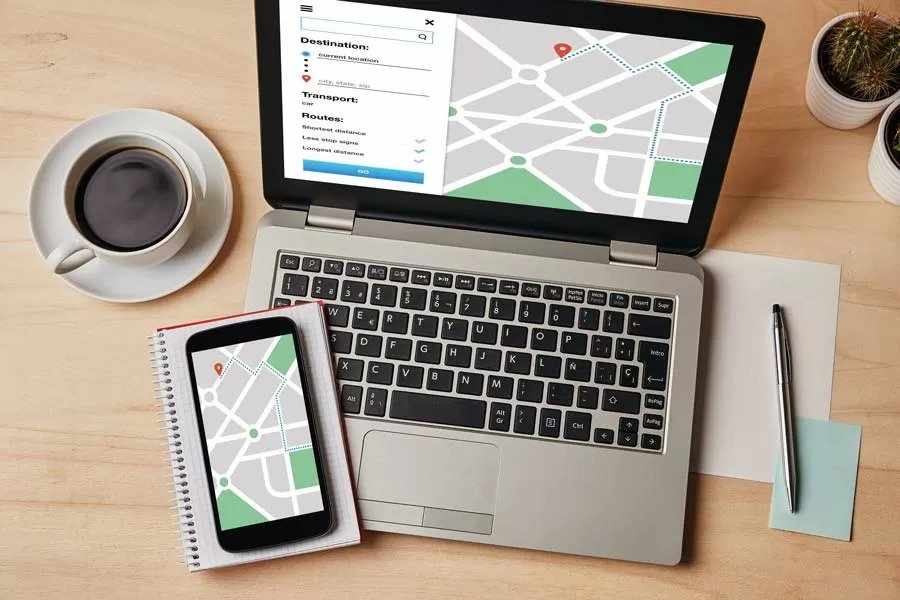
These new consumer expectations and behaviors are relevant to any business with a brick and mortar presence. An incredible 76% of local mobile searches lead to a store visit within one day, while 28% result in a purchase.3 When people search for something nearby, they are often ready to buy.  discover how to optimize for local customers - brightedgeThis is why it is so critical to ensure that your business shows up in Google’s Local 3-pack: the trio of nearby businesses that dominate the search engine results page (SERP) of 23% of local-focused mobile searches, according to BrightEdge research. When a local 3-pack is displayed on mobile, 55% of the clicks are for one of the three listings. If your business is not featuring there, you’re immediately missing out on half your potential audience.   

Here are three ways to make sure your business is easy to find.

1. Have clear, complete, and factual information

Google’s main source of information about your business is from company profiles found on Google My Business. To ensure the correct information is displayed in Google Search or Google Maps results pages, make sure that your company profile page is complete and up-to-date. While Google searches account for nearly two-thirds of all searches,4 it’s also important to update and maintain your business profile on other channels like Yelp for Business, which is where Bing gets its local business information for display on Bing Search and Bing Maps results pages.

Also, it is important to clearly display your business address, contact details, and business hours on your own website’s home page, as this is another source that Google and Bing will check. Having accurate and informative “About Us” and “Contact” pages on your website will also boost your chances of appearing high in search results rankings. Finally, if you have multiple locations, create an individual page for each location with the unique information and content about each one.  

A good tip is to look at existing 3-pack search results for the keywords related to your business’ products or services, and ensure that your company profiles have the same keywords, or read Google’s suggestions for improving your company’s local ranking.

2. Be inventive with the keywords you target

Last year, Google reported a 500% increase in “near me” mobile searches that included “can I buy” or some variant. Knowing which keywords related to your business that people include in these searches is critical to your chances of appearing in that valuable 3-pack near me search result. Don’t be afraid to speak the local language. A long sandwich may be called a “sub” in most of the US, but if you’re targeting local customers in Philadelphia, they are more likely to call it a “hoagie,” in New York City, a “hero,” or in New England, a “grinder.”

learn more about seo for local customers - brightedgeIf your business is near a prominent landmark or location in the area, think about potential variations on “near me,” like “near the ballpark” or “near Times Square.” You should also find out which terms your competitors are successfully targeting and see if they apply to your business. BrightEdge can help you analyze and prioritize which keywords you should create content for by helping you understand which universal results (like a Local 3-pack or Quick Answer) appear on the first page of search results.  

3. Encourage great local customer reviews

Google doesn't display just any three businesses in the 3-pack search results. The search engine wants to give its customers the best three local businesses related to their searched keyword. That’s why businesses with good reviews on Google are more likely to be featured in 3-pack search results. Encourage your happy customers to leave positive reviews on these sites, along with any sites related to your business, whether that’s a food blog or car review site.

If your business has received good customer reviews, featuring them on your website can be helpful. Get permission from your customers to post the review first. Then, mark up the review with optimizing schema in order to claim it as a first-party review. You may see the review on the search engine results page, much like a Yelp listing, except this drives traffic to your website, not Yelp’s. Google can be strict about the use of first-party reviews so it’s worth looking at its rules if you’re using a review.

Whatever your business, having complete factual information, being inventive with your keyword targeting, and getting great reviews will help local customers find your business when they’re searching locally. With Google constantly tweaking what it’s looking for and how it displays search results, BrightEdge will tell you how to optimize keyword targeting and keep you up to date with changing search engine algorithms with the goal of boosting traffic to your site so your business can stay ahead.

Mobile devices surpassed desktop as the main way that people browse the internet a number of years ago, for some industries BrightEdge research found that 62% of all web traffic comes from a smartphone or tablet device.1 For some industries, like food and beverage, the share of searches from smartphones and tablets is as high as […]

The post Three Ways to Help Local Customers Find Your Business appeared first on BrightEdge SEO Blog.

,